Source Natural Chicory Root Extract Inulin for Medicine, Food, and Health Care
Find 30 verified listings for natural chicory root extract inulin from Chinese suppliers. Compare specifications, certifications, and prices for use in medicine, food, and health care products.
Key considerations
Products List






Comprehensive Sourcing Guide
Strategic Sourcing Guide for Natural Chicory Root Extract Inulin
Procuring natural chicory root extract inulin requires a disciplined approach that balances botanical authenticity with rigorous quality assurance. As a functional ingredient widely utilized in the food, pharmaceutical, and health care sectors, the market for this extract is characterized by diverse specifications and varying degrees of processing. Buyers must navigate a landscape where the core botanical source remains consistent, but the final product attributes, such as inulin concentration and physical form, differ significantly between suppliers. This guide outlines the critical technical, compliance, and operational factors necessary for a successful procurement strategy, relying strictly on verified product attributes and established industry standards.
Botanical Origins and Technical Specifications
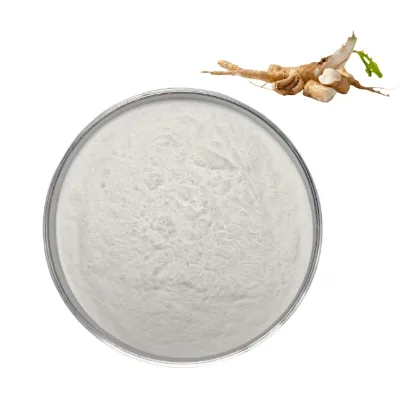
The foundation of any high-quality inulin product lies in its botanical source. Verified data indicates that the primary raw material is derived from Cichorium Intybus L., commonly known as the Jerusalem Artichoke or chicory root. The specific part of the plant utilized is the root, which is processed to extract the polysaccharide chain. While some listings reference the botanical name Jerusalem Artichoke, the scientific designation Cichorium Intybus L. provides the most precise taxonomic identification for procurement specifications.
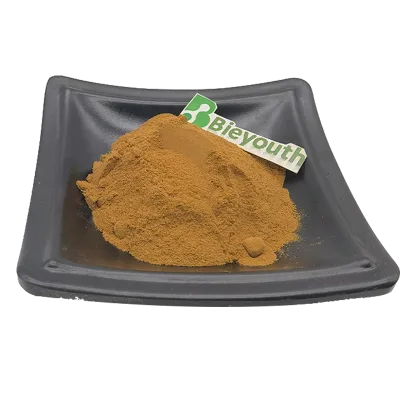
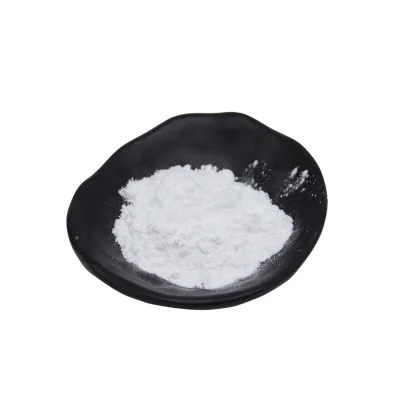
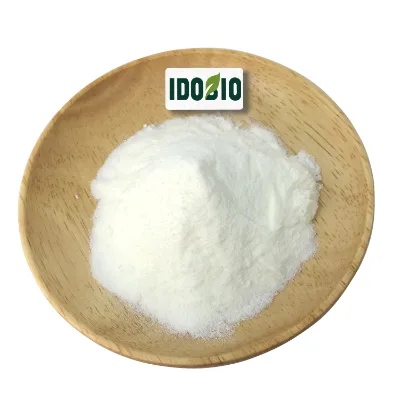
The physical state of the final product is predominantly observed as a powder. However, the coloration can vary; while a white powder is a common specification, brown powder variants are also documented in the market. This variation often correlates with the degree of purification or the specific extraction method employed. The CAS number 9005-80-5 serves as a critical identifier for the chemical substance, ensuring that the material procured matches the standard definition of inulin.
Concentration is perhaps the most variable technical specification. Suppliers offer products with inulin content ranging from 50% to 95%. Some specifications list a standard of 90%, while others define the product simply as "Inulin" or "Chicory Extract" without a fixed percentage in the general description, necessitating a request for a Certificate of Analysis (CoA) to confirm the exact assay. The material is generally classified as Food Grade, though some listings specify "Food Garde" or simply "Food," highlighting the need for precise terminology verification. The shelf life is consistently observed at 24 months or 2 years, provided the storage conditions are met.
Compliance Framework and Certification Verification
Navigating the regulatory landscape is essential for B2B buyers, particularly when the end application involves medicine or health care products. The supply chain for chicory root extract is often associated with a robust set of certifications. High-confidence data confirms that suppliers frequently hold HACCP, ISO, and BRC certifications. Additionally, specific product listings indicate the presence of ISO9001, Kosher, Halal, QS, and FDA certifications. The RoHS certification is also noted in certain contexts, which may be relevant for specific industrial applications or regional compliance requirements.
It is crucial for buyers to understand that certification status is not uniform across all listed products. One listing may cite HACCP, FDA, ISO, BRC, and RoHS, while another may only list HACCP, ISO, and BRC. Therefore, procurement teams must verify the specific certificate scope for the lot they intend to purchase. The presence of these certifications does not automatically guarantee compliance with every jurisdiction's regulations; rather, they indicate that the manufacturing facility has undergone third-party auditing against recognized standards.
When evaluating compliance, buyers should request current, valid certificates that match the specific product model or batch. For instance, a product model labeled "Nutramax-INU" may have a different certification profile than a model labeled "inulin" or "food grade." The origin of the product is predominantly China, with specific mentions of Mainland China, Anhui, and Shaanxi as production hubs. This geographic concentration can influence logistics and regulatory familiarity, as Chinese manufacturers are accustomed to exporting to global markets with these specific certification suites.
Cost Drivers and Economic Parameters
The pricing structure for natural chicory root extract inulin is influenced by several variables, primarily the purity level, packaging format, and order volume. The observed market price range spans from $0.85 to $100 per unit, a wide disparity that reflects the difference between raw bulk material and highly purified, specialized grades. The minimum order quantity (MOQ) is equally variable, ranging from 1 unit to 1000 units, with specific listings noting an MOQ of 1kg. This flexibility allows buyers to test the market with small quantities before committing to large-scale production runs.
Packaging plays a significant role in cost calculation. Standard packaging configurations include fiber drums with an LDPE bag inside, typically weighing 25kg per drum. Alternative packaging options include 25kg bags or palletized loads of 1000kg. The choice between a fiber drum and a simple bag can impact shipping costs and storage requirements. Furthermore, the "Resource" attribute is listed as "Chemosynthesis" in some contexts, which may imply a specific production methodology that affects the cost structure compared to purely physical extraction methods.
Buyers should also consider the cost of samples. Many suppliers offer free samples ranging from 5g to 20g, or 10g to 20g, which is a standard practice in the industry to facilitate quality verification before a full order. However, the cost of shipping these samples and the subsequent bulk order must be factored into the total landed cost. The "Grade" is consistently listed as Food Grade, but the distinction between "Food Grade" and "Food Garde" in documentation highlights the importance of reviewing the exact wording on commercial invoices to avoid confusion during customs clearance.
Typical Applications and Formulation Compatibility
The versatility of chicory root extract inulin makes it suitable for a broad spectrum of applications. The primary sectors identified include Medicine, Health Care Products, and Food. Within the food industry, it serves as a functional ingredient, often labeled for its nutritional value. The product is designed to be incorporated into various forms, including capsules, tablets, pastes, suppositories, lotions, and injections. This wide range of application forms suggests that the extract is compatible with diverse manufacturing processes, from dry blending for powders to liquid processing for lotions and injections.
The "Assay Method" used to verify the quality of the extract is typically UV or HPLC (High-Performance Liquid Chromatography). The reliance on HPLC for many specifications indicates a high level of analytical rigor required to confirm the inulin content and purity. For buyers formulating products, the compatibility of the extract with other ingredients is paramount. The "Application Form" listing suggests that the powder can be directly used in capsule and tablet manufacturing, while the inclusion of "Paste" and "Lotion" implies solubility or dispersibility properties that must be tested in the specific formulation matrix.
The "Part Used" being the root and the "Cultivation method" being artificial planting suggests a controlled agricultural supply chain. This control is vital for maintaining consistency in the botanical profile, which directly impacts the performance of the extract in the final product. Whether the end product is a dietary supplement or a functional food, the consistency of the inulin chain length and degree of polymerization, verified through HPLC, is critical for meeting the intended health claims and texture requirements.
Supplier Evaluation and Quality Control Protocols
Evaluating a supplier for chicory root extract requires a multi-faceted approach that goes beyond price and certification. Buyers must assess the supplier's ability to provide consistent quality, as evidenced by the "Assay Method" and "Standard" specifications. The presence of multiple standards, such as "Inulin," "90%," and "50%- 95% inulin," indicates that the supplier must be able to tailor the product to specific purity requirements. A reliable supplier will provide a CoA for every batch, detailing the assay results against the agreed standard.
Quality control should also extend to the physical attributes of the product. The "Appearance" is listed as both "White" and "Brown Powder," and the "State" is consistently "Powder." Buyers must define their acceptable range for color and particle size in their technical specifications to avoid receiving a product that, while chemically correct, is unsuitable for their specific application. The "Storage" requirement is noted as "Cool Dried Storage," and the "Shelf" life is 24 months. These parameters must be strictly adhered to by the supplier during transit and storage to prevent degradation.
The "Single package size" of 30x20x10 cm and the "N. W.: 25kgs/Drum" specification provide concrete data for logistics planning. However, buyers should verify if these dimensions are consistent across all batches, as variations can affect container loading efficiency. The "Brand Name" and "Model Number" (e.g., BYH1255213397, Nutramax-INU) serve as unique identifiers for the product line. When evaluating a supplier, buyers should ensure that the model number on the commercial invoice matches the technical data sheet to prevent discrepancies in customs documentation or regulatory filings.
Long-Term Procurement and Supply Chain Stability
Sourcing natural chicory root extract inulin is not merely a transactional activity but a strategic partnership that requires long-term planning. The "Season" is listed as "All Seasons," which suggests a stable supply of raw materials and a continuous production capability. This is a significant advantage for buyers who require consistent inventory levels without seasonal interruptions. The "Place of Origin" being Shaanxi or Anhui, China, indicates a mature industrial cluster for botanical extracts, which generally supports a reliable supply chain.
However, buyers must remain vigilant regarding the "Customization" attribute, which is listed as "Available." This implies that suppliers can modify packaging, labeling, or even the extraction process to meet specific client needs. While this flexibility is beneficial, it introduces complexity into the quality control process. Any customization must be clearly documented and validated to ensure it does not compromise the product's integrity or regulatory status.
The "Resource" attribute of "Chemosynthesis" warrants further investigation. In the context of natural extracts, this term may refer to the biochemical processing of the root material. Buyers should clarify this term with the supplier to ensure it aligns with their definition of "natural" and does not involve synthetic additives that could violate their product claims. Finally, the "Sample" availability of 10-20g or 5-20g for free allows for ongoing quality monitoring. Establishing a protocol for regular sampling and testing throughout the procurement lifecycle is essential for maintaining the high standards required for food, health care, and pharmaceutical applications.
FAQs
What is the botanical source of natural chicory root extract inulin?
The primary botanical source is Cichorium Intybus L., commonly known as the Jerusalem Artichoke. The product is derived specifically from the root of this plant, processed into a white or brown powder with a CAS number of 9005-80-5.
Which certifications are available for natural chicory root extract inulin?
Suppliers often hold HACCP, ISO, BRC, and FDA certifications. Additional certificates may include ISO9001, Kosher, Halal, QS, and RoHS, though specific certification profiles vary by product model and manufacturer location in China.
How is natural chicory root extract inulin typically packaged?
Standard packaging includes fiber drums with an LDPE bag inside, weighing 25kg per drum. Alternative options include 25kg bags or palletized loads of 1000kg, with single package sizes often measuring 30x20x10 cm.
What is the minimum order quantity for natural chicory root extract inulin?
The minimum order quantity ranges from 1 unit to 1000 units, with specific listings noting an MOQ of 1kg. Buyers can often request free samples of 5g to 20g to verify quality before placing a bulk order.
Can natural chicory root extract inulin be used in medicine applications?
Yes, the product is suitable for medicine, health care products, and food applications. It is compatible with various forms including capsules, tablets, pastes, suppositories, lotions, and injections, provided the correct assay method is used.
What is the shelf life of natural chicory root extract inulin?
The shelf life is consistently observed at 24 months or 2 years. To maintain this duration, the product must be stored in cool, dried conditions, as specified in the product attributes and storage guidelines.